Zinc Oxide vs. Titanium Dioxide. Which Mineral Sunscreen Ingredient Is Best?
Mineral sun protection is having a moment, and it’s all thanks to these two — zinc oxide and titanium dioxide. They’re the backbone of tinted mineral sunscreens worth your shelf space, trusted for their ability to deliver serious UV protection without the harshness of chemical filters.
But choosing between them? That’s where things get interesting. Let’s dig into their strengths, quirks and finishes on the skin, so you can find your perfect match.

What are zinc oxide and titanium dioxide?
Zinc oxide and titanium dioxide are naturally occurring mineral UV filters used in sunscreens to protect the skin from harmful ultraviolet radiation. Unlike chemical filters, which absorb UV rays and convert them into heat, mineral filters sit on top of the skin, reflecting UV rays like a mirror.
This is what gives mineral-based sunscreen its reputation for being gentle, safe and suitable even for the most reactive skin types.
How do these ingredients work to protect your skin?
Mineral filters work by creating a physical barrier on the surface of your skin, which makes them incredibly effective at blocking both UVA (the one’s that cause ageing) and UVB (the one’s that cause sunburn) rays.
Their protective action comes from their unique particle structure, which reflects and scatters UV radiation while also absorbing a portion of it.
Because they work immediately upon application, there’s no waiting time or activation period. They’re also impressively stable in sunlight, meaning the protection you apply is the protection you actually get.


Zinc oxide
Zinc oxide provides the broadest UV coverage of any sunscreen filter, delivering broad-spectrum protection that blocks both UVA and UVB rays.
Zinc oxide is also naturally soothing, which is why it’s a favourite for sensitive, reactive or easily flushed complexion that’s found in everything from diaper creams to redness-calming skincare.
But it’s not perfect — at higher concentrations, zinc oxide can feel heavier and leave more visible white cast, especially on deeper skin tones.
Today’s zinc oxide is ultra-refined and blends much better than the versions you remember from childhood, but it still requires smart formulation to look seamless on the skin.
Titanium dioxide
Titanium dioxide does a lot right — it’s lightweight, gentle and easy to formulate into comfortable textures. But it’s not the strongest filter out there.
Titanium dioxide gives reliable UVB protection and some UVA coverage, but its long-UVA protection is limited, meaning it can’t deliver full broad-spectrum benefits by itself.
It can also still leave a white cast, especially on deeper skin tones, though usually less than traditional zinc. This is why most high-performance mineral sunscreens pair titanium dioxide with zinc rather than relying on it alone.
Why are they considered safer than chemical sunscreens?
Mineral filters have a reputation for being safer, mostly because they stay on the skin’s surface instead of being absorbed into it.
Zinc oxide and titanium dioxide protect by physically blocking and scattering UV rays — a straightforward mechanism that doesn’t rely on chemical reactions.
That makes them far less likely to cause stinging, redness or irritation, which is why dermatologists often recommend mineral-based SPFs for sensitive skin.
They’re also naturally photostable, meaning they stay effective in sunlight without breaking down or needing complex stabilisers to prevent degradation.
And unlike some chemical filters that have raised environmental or endocrine-disruption concerns, these minerals have a long safety record with minimal systemic absorption.
Zinc oxide vs. titanium dioxide. What are the key differences?
Zinc oxide and titanium dioxide may both be mineral filters, but they don’t behave the same way. Here’s the honest breakdown.
UV protection. Which one blocks UVA and UVB rays better?
Zinc oxide is the clear winner for full-spectrum protection.
It covers the entire UVB and UVA range, including deeper long-UVA rays, which are responsible for pigmentation, collagen breakdown and premature ageing. No single chemical filter and no other mineral filter can match this level of coverage.
Titanium dioxide performs well in UVB and short-UVA, so it’s still effective for everyday protection. But it does not cover long UVA, meaning it can’t provide complete broad-spectrum protection on its own.

White cast. Which one blends better into the skin?
Both can leave a white cast, but in different ways.
Zinc oxide can be more prone to white cast, especially at higher percentages or in older-style formulas. It creates a more opaque layer, which can show more on deeper skin tones.
Titanium dioxide generally blends better. It tends to be softer and sheerer but can still leave a chalky cast.
Modern formulations help reduce this a lot, especially tinted mineral SPFs, which contain pigments that camouflage the cast.
What about suitability for different skin types?
Sensitive or reactive skin:
Zinc oxide
It’s calming, barrier-friendly and far less likely to sting or irritate, making zinc oxide your safest bet.
Acne-prone skin:
Both, but zinc oxide has a slight edge
Zinc has anti-inflammatory benefits that can help calm breakouts.
Titanium dioxide is also non-comedogenic, but zinc tends to feel kinder on angry or inflamed breakouts.

Oily or combination skin:
Titanium dioxide
It usually feels lighter and more breathable, which is perfect if you hate the feeling of sunscreen sitting on the skin.
Dry or dehydrated skin:
Either, depending on the formula
Hydrating bases pair well with zinc oxide, while silky and luminous textures play nicely with titanium dioxide. Ultimately, the supporting ingredients decide how dry skin will respond.
Mature skin:
Zinc oxide
Long UVA protection is essential for preventing (as well as reducing) dark spots and wrinkles. Titanium dioxide simply can’t deliver this on its own.
Which ingredient is best for your skin?
If you want the most complete UV protection, especially against the deep UVA rays that trigger ageing and pigmentation, zinc-based sunscreen is the superior choice. If you want a lighter, easier-to-wear feel, titanium dioxide tends to blend more seamlessly.
But the sweet spot is when they work together, so for most people the ideal match is a formula that uses both.
Can you find sunscreens that contain both?
Many of the best mineral sunscreens blend zinc oxide and titanium dioxide. While zinc oxide delivers broad UVA/UVB coverage, titanium dioxide helps soften the white cast and keeps the formula feeling smoother.
Together, they create mineral SPFs that protect well and feel good on the skin. This duo is often what separates a basic SPF from a clean sunscreen that feels genuinely pleasant to wear every day.
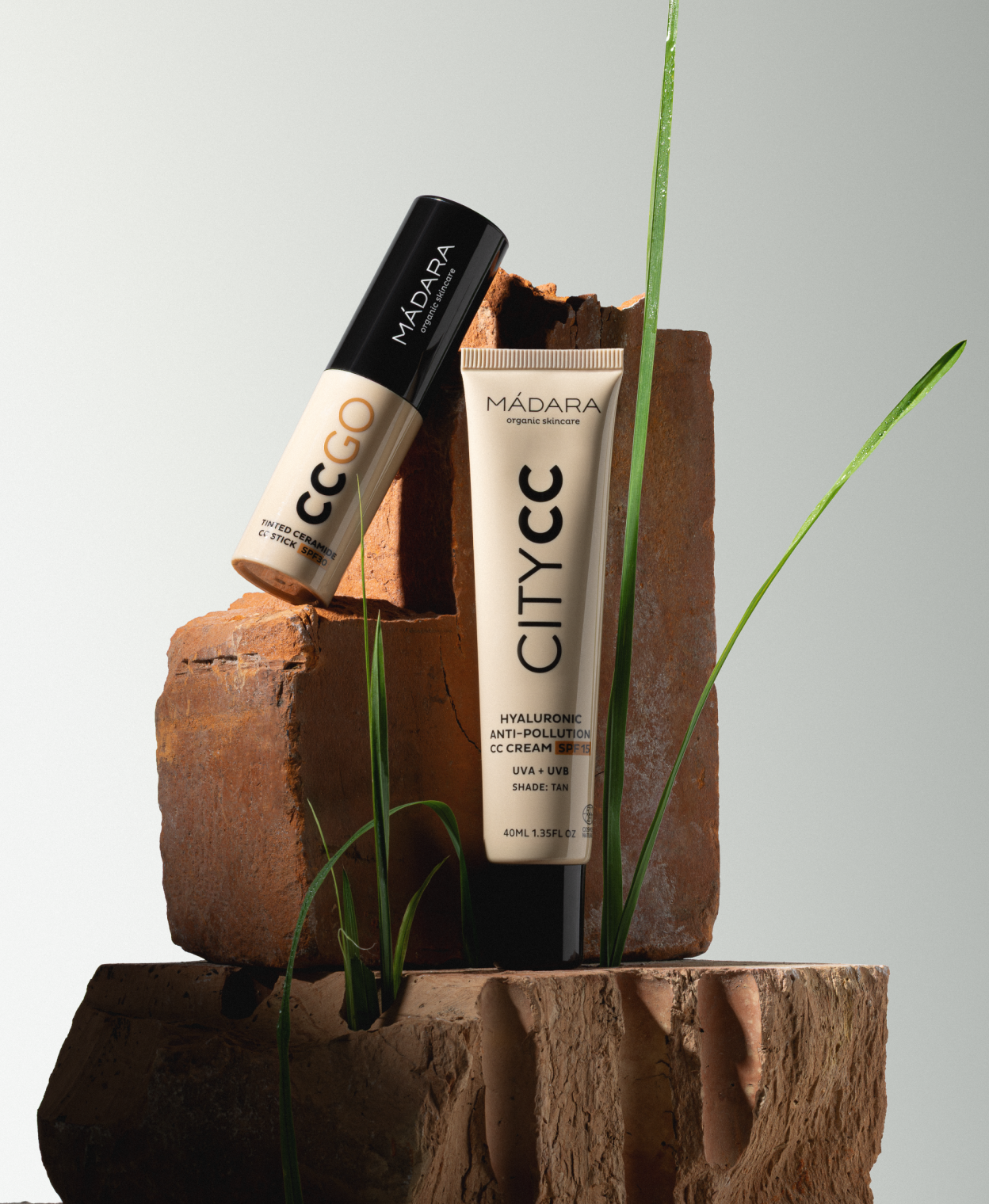
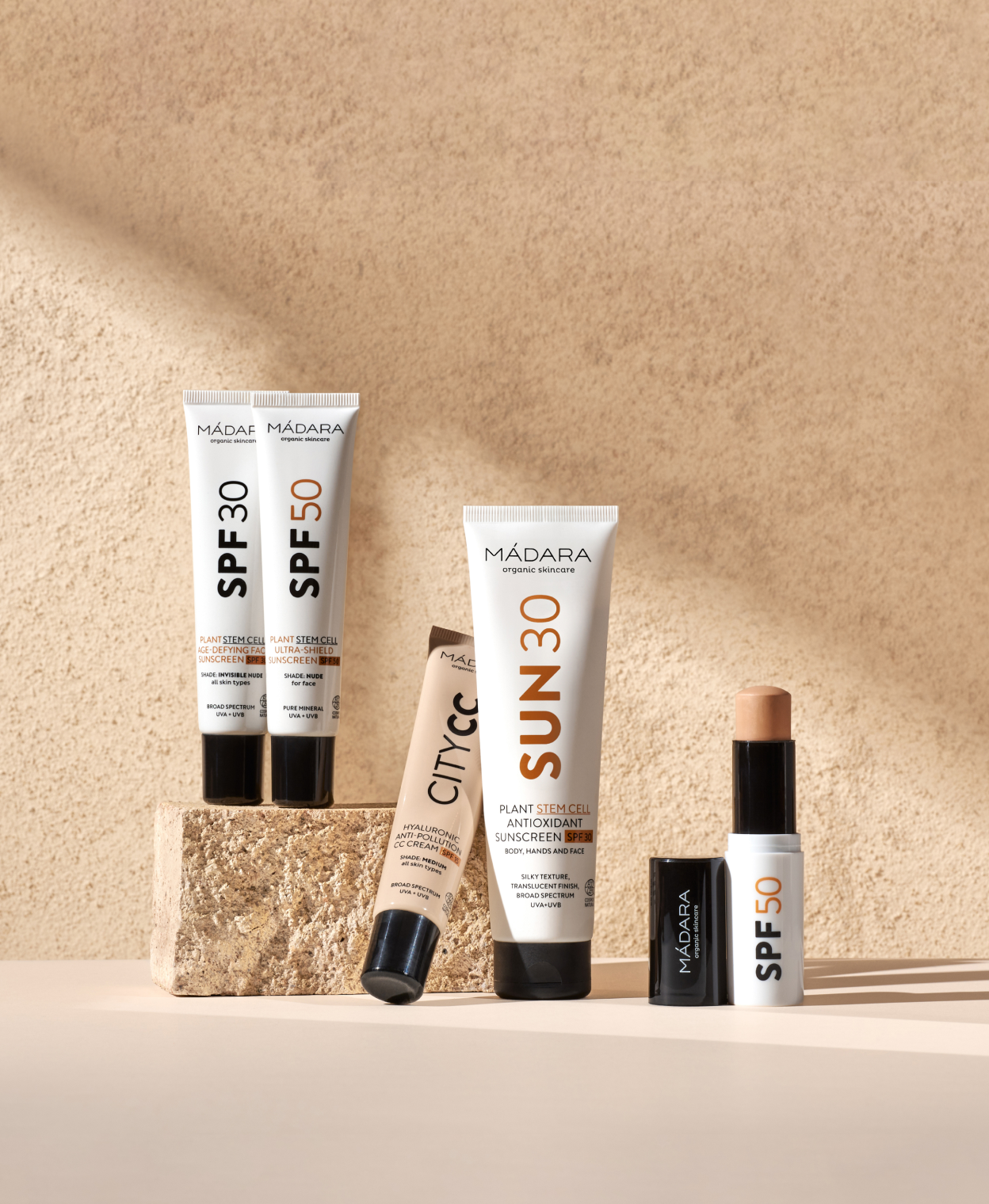
MÁDARA tinted mineral sunscreens use both non-nano zinc oxide and titanium dioxide filters to give you full-spectrum UVA/UVB defence plus a natural tint that blends beautifully into skin.
Now, which one should you really choose?
If you want the best of both worlds — choose a sunscreen that uses both zinc oxide and titanium dioxide.
Ultimately, the best sunscreen is the one you’ll put on every single day. Choose the texture you actually enjoy wearing, and your skin will get the protection it needs.