Is sunscreen secretly hurting your skin? Here's the truth
Sunscreen is supposed to be the safest step in your routine. But not all sunscreens act the same once they’re on your skin.
Chemical SPFs work differently than mineral ones and understanding that difference can change how your skin looks and feels. Here’s what’s worth knowing.
At a glance, the difference is simple. Chemical sunscreens absorb UV rays inside the skin and convert them into heat. Mineral sunscreens reflect UV rays away from the skin’s surface. From here, let's unpack what it really means for your skin.

The dark side of chemical sunscreens
Chemical sunscreens often perform beautifully at first glance. Designed to be lightweight and disappear into the skin, they’ve become the go-to option for daily wear. And for many people, they work really well. For others? Not always.
How chemical UV filters work and why that might be a problem
Chemical filters protect by absorbing UV rays and converting them into heat. This reaction happens inside the skin rather than on top of it.
In resilient skin, this may go unnoticed. In skin that’s sensitive, acne-prone or already inflamed, it can contribute to irritation or sensitivity over time.


Common ingredients in chemical sunscreens
Most chemical sunscreens rely on a combination of UV filters to achieve broad-spectrum protection. Some of the most commonly used include oxybenzone, octinoxate and avobenzone.
They’re effective but also known for being more reactive. For some people, that reactivity shows up as stinging, redness or irritation, especially if your skin is already under stress.
Are chemical sunscreens safe for your skin?
They’re approved, they’re popular and for plenty of people, they work just fine. However, chemical SPFs don’t behave the same way on every face.
Some people can use them daily with no issues at all, while others notice their skin becoming more sensitive over time. That usually means the formula isn’t the best match for that skin type.
Can they trigger allergies and irritation?
Yep, they sure can. Certain chemical filters can cause stinging or redness once they’re exposed to sun and heat. It often shows up as skin that feels warm, flushed or suddenly extra reactive by the end of the day.
Do they cause hormonal disruptions?
This question comes up a lot, and the answer isn’t black and white. Some chemical filters have shown hormone-like behaviour in lab studies, and traces have been found in the body after repeated use.
That doesn’t automatically mean harm, but it’s enough for many people to switch to mineral-based sunscreens while the prolonged impact of chemical SPFs is still being studied.
Can chemical sunscreens increase free radical damage?
They can, depending on the formula.
Some chemical filters break down when exposed to sunlight if the formula isn’t well stabilised. When that happens, they may contribute to the formation of free radicals — something skin already has enough of from UV exposure alone.
That’s one reason mineral sunscreens, which work by reflecting UV rays instead, are often considered more stable.
How chemical SPFs might be making your skin worse
When chemical sunscreens don’t agree with your skin, the effects tend to show up as small, ongoing issues that are easy to blame on stress and “bad skin days.”
So, if your complexion feels harder to manage since committing to daily SPF, your sunscreen formula might be to blame.
Do they aggravate acne and sensitivities?
Yep, they can. Some chemical sunscreens interact poorly with heat, sweat and oil — the exact conditions they’re worn in most. This can lead to clogged pores, flare-ups and irritation, especially for those with acne-prone and sensitive skin.

Can some chemical filters lead to hyperpigmentation?
Yes, indirectly. Skin that’s irritated is more likely to respond to sun exposure with excess pigment. That’s when post-breakout marks darken or uneven tone becomes harder to fade, even with regular SPF use.
Do chemical sunscreens break down in sunlight and become less effective?
Not all chemical sunscreens are equally stable in sunlight. Some filters degrade faster than others, which can reduce effectiveness throughout the day — and why diligent reapplication matters so much.
Mineral-based SPF, however, is often described as more reliable throughout the day.
Why mineral sunscreens are the safer alternative
Mineral formulas tend to win people over because they tend to behave gently and predictably — which is why they’re often seen as a clean sunscreen option for daily wear.
How zinc oxide and titanium dioxide work differently
Mineral sunscreens use zinc oxide and titanium dioxide to reflect UV rays away from the skin before they can cause damage. There’s no chemical reaction, just a protective layer that starts working the moment it’s applied.
Instead of triggering reactions, they sit on the surface and get to work quietly. That surface-level approach is what makes zinc-based sunscreen feel gentler to so many people.


Why mineral sunscreens are better for sensitive and acne-prone skin
For skin that’s easily overwhelmed, mineral sunscreens tend to cause fewer surprises. They’re less likely to clog pores, sting or trigger flare-ups, making them the ideal choice if your skin is reactive, inflamed or prone to breakouts.
Do they offer more reliable protection?
Mineral filters are naturally stable in sunlight. As long as they’re applied properly and reapplied as needed, they continue to provide consistent protection throughout the day.
Chemical vs mineral sunscreen: difference at a glance
Here's a straightforward recap of their differences to help you navigate in the world of suncreen.

Chemical sunscreens
How they work: Absorb UV rays inside the skin and convert them into heat
Stability: Some filters can degrade in sunlight if not well stabilised
Skin tolerance: Can trigger stinging, irritation or breakouts in sensitive or acne-prone skin
Best suited for: Resilient skin that tolerates active formulas well

Mineral sunscreens
How they work: Reflect UV rays on the skin’s surface using zinc oxide or titanium dioxide
Stability: Naturally stable in sunlight and effective immediately after application
Skin tolerance: Generally gentler and better tolerated by sensitive, reactive or inflamed skin
Best suited for: Sensitive, acne-prone, rosacea-prone or post-treatment skin
Choosing a high-performance mineral sunscreen
Not all mineral sunscreens are created equal. Some will be a delight to wear, but others — make you hate SPF.
Here’s what separates the good ones from the ones that sit half-used on your shelf.

What to look for in a mineral formula
Broad spectrum protection is non-negotiable. After that, think practically.
If white cast is a concern, a tinted formula can help neutralise it while evening out your skin tone. If you prefer bare skin, go for a non-tinted sunscreen but make sure it blends easily to avoid that dreaded chalky look.
How to make the switch without compromising on comfort
Mineral sunscreen needs decent prep, which is why it works best when skin is already hydrated.
Apply it after moisturiser, take your time to blend evenly and let it settle before adding anything else.
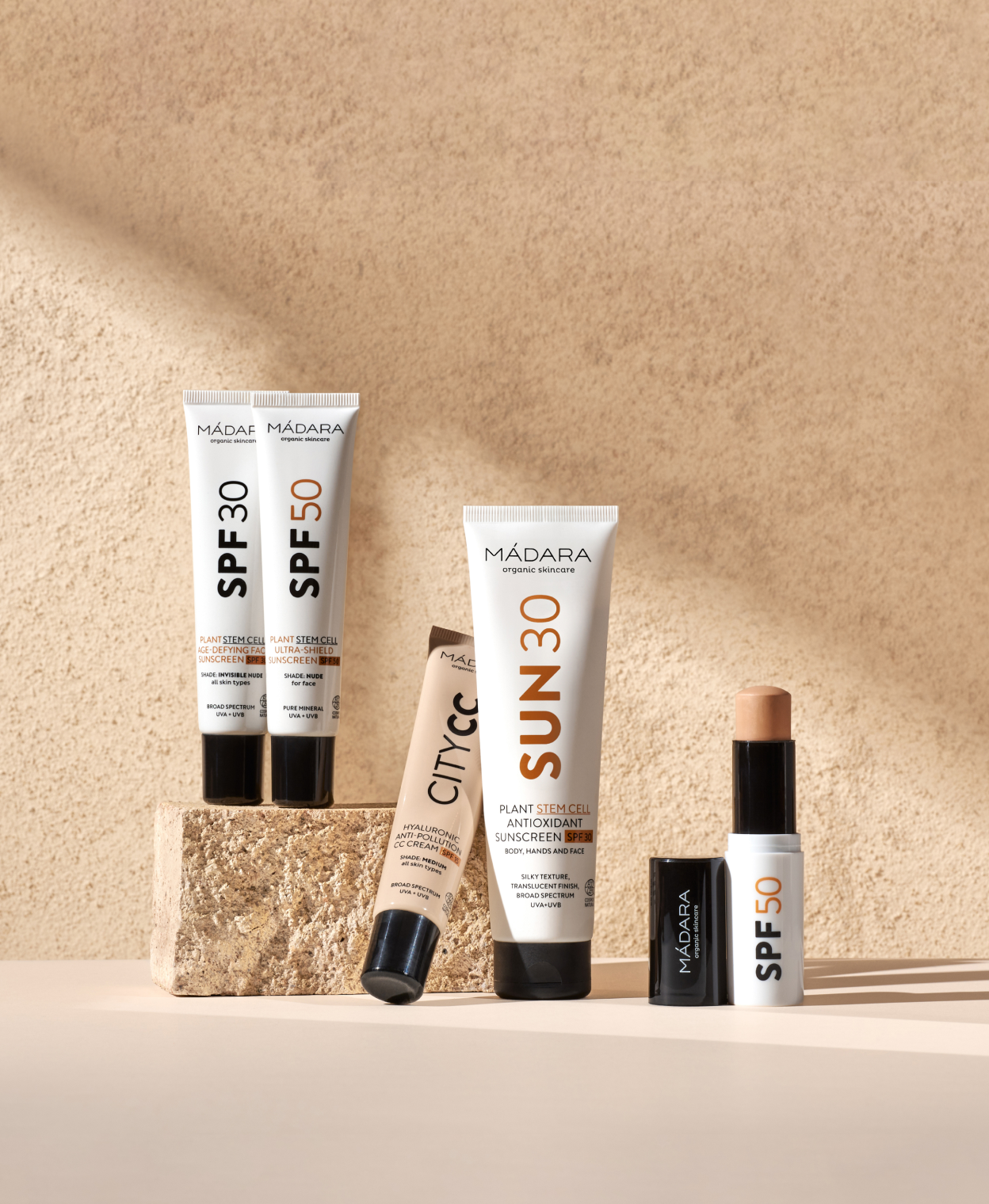
Explore MÁDARA mineral sunscreens
At MÁDARA, we don’t treat mineral sunscreen as a last step you squeeze in. It’s built like skincare — featuring modern textures, invisible finishes and 100% mineral formulas with non-nano zinc oxide.
From the beloved SPF30 Plant Stem Cell Age-Defying Sunscreen with a soft tint and superb skincare benefits to the compact SPF50 Mineral Sunscreen Stick that's easy to reapply and the SPF30 Plant Stem Cell Antioxidant Body Sunscreen for longer days outside, it's sun protection that's made for real routines.

Finally, make your sunscreen work for you
Sunscreen isn’t something you use once in a while — it’s something you put (or at least should be putting) on your face every single day.
That is why how a formula interacts with your skin matters just as much as the SPF number on the label.
Why it’s time to rethink your sunscreen choice
If sunscreen is something you put up with rather than enjoy using, it’s something worth paying attention to.
A good sunscreen shouldn’t leave your skin feeling reactive, congested or irritated. When the formula is right, everything else in your routine tends to fall into place — skin feels calmer, makeup sits better and you stop thinking about your SPF altogether.
Your transition to mineral sunscreen
Make the switch intentionally. Start with a mineral sunscreen you’ll actually reach for, use it daily and give your skin a few days to adjust. If it feels calmer, you’ve found your answer.