5 Reasons to Switch to Mineral Sunscreens (and Never Look Back)
If you’re serious about your skin, sunscreen is non-negotiable. And yet, many SPFs rely on filters that absorb into the skin, trigger irritation and raise legitimate environmental concerns. Mineral sunscreens take a different approach.
Here, we share five reasons to choose mineral sunscreens over chemical ones — including how tinted mineral sunscreens make the most sense for everyday protection.

1. Instant and reliable sun protection
Sun protection shouldn’t depend on timing it perfectly. The biggest advantage of mineral-based sunscreen is also the simplest — it protects your skin from the moment of application, no waiting time required.
How mineral sunscreens work like a shield (vs. chemical sunscreens that absorb UV rays)
Mineral sunscreens sit on top of the skin and deflect UV rays before they can penetrate. Zinc oxide and titanium dioxide work as a physical barrier, meaning they don’t need to be absorbed to be effective.
Chemical sunscreens work differently. Their filters absorb UV radiation into the skin and convert it into heat, a process that can increase the risk of irritation and makes protection more dependent on wait time.

Physical filter

Chemical filter
No need to wait — immediate protection upon application
Chemical sunscreens typically require 15–30 minutes before they reach full effectiveness, a step that’s easy to miss in real life.
Mineral sunscreens work as soon as they’re applied, making them especially practical for everyday use, reapplication and those moments when you head outside unexpectedly.
2. Safer for sensitive and acne-prone skin
If your skin is sensitive or breakout-prone, sunscreen can feel like a gamble. Stinging, redness, clogged pores or breakouts are often linked to how certain chemical UV filters interact with the skin.
Because mineral sunscreens remain on the surface without being absorbed, they tend to be better tolerated — and that difference matters.
Why zinc oxide and titanium dioxide are less irritating
Zinc oxide and titanium dioxide are known for being gentle and non-reactive. They protect externally, which helps reduce the risk of irritation when the skin barrier is already compromised.
Zinc oxide is also widely recognised for its calming properties, making it a common choice for sensitive and reactive skin types.

Do mineral sunscreens help with redness and breakouts?
Mineral zinc-based sunscreens won’t fix acne, but they’re far less likely to make it worse. By minimising irritation — one of the biggest breakout triggers — they help skin stay calmer, especially during flare-ups.
3. Free from potentially harmful ingredients
When it comes to UV filters, more isn’t always better. For many people, clean sunscreen means fewer filters and fewer unknowns — which is why mineral SPFs use a short, well-understood set of UV filters, while chemical formulas often rely on several different actives.
Why some chemical UV filters raise questions
Chemical sunscreens use a range of UV filters, including oxybenzone and octinoxate, to absorb radiation within the skin. These filters are effective and approved for use, but some have been shown to absorb into the body at measurable levels, even entering our bloodstream.
Absorption alone doesn’t equal harm. However, it has prompted ongoing research into long-term exposure, especially with daily use.
Mineral-based SPF avoids this. Zinc oxide and titanium dioxide remain on the surface of the skin, limiting absorption and reducing systemic exposure.


Do chemical sunscreens affect hormones?
You’ll often hear the term “endocrine disruptors” mentioned in conversations about sunscreen. Some chemical UV filters have shown hormone-like activity in laboratory and animal studies at high concentrations. These findings have led scientists to continue studying their long-term effects in humans.
So far, there’s no definitive evidence of harm in humans when sunscreens are used as directed. Still, many people favour mineral SPFs because they don’t pose such safety concerns.
Zinc oxide is considered non-hormone-active and highly stable, making it a straightforward option for daily protection.
4. A more eco-friendly and reef-safe form of protection
Whatever sunscreen you wear to the beach, the lake or the sea eventually washes off, which is why environmental impact has become part of the conversation around sun protection.
Mineral sunscreens are often chosen with this in mind, as they are gentler not only to your skin, but also the environment.
What research suggests about chemical sunscreens and coral reefs
Two seemingly innocent UV filters commonly found in chemical SPFs — oxybenzone and octinoxate — are already banned in several coastal regions like Hawaii. Why? It’s because these damaging chemicals can cause harm to marine life, bleaching and damaging reefs.
While sunscreen is not the only cause of coral bleaching (climate change is another factor), research suggests that these chemical filters may add pressure in already vulnerable reef environments.

What “reef-safe” really means — and where mineral sunscreens fit in
There’s no official definition of “reef-safe,” which makes formulation more important than labels.
In practice, reef-friendly sunscreens rely on mineral filters like zinc oxide and titanium dioxide, which are generally considered less disruptive to marine life, particularly in non-nano form. They don’t dissolve easily in water and are less likely to be absorbed by marine organisms.
5. Age-defying sun and blue light protection for every day
Daily protection isn’t just about avoiding sunburns. UV exposure, even on cloudy days or indoors near windows, adds up quietly — gradually affecting skin’s firmness, tone and texture.
Mineral sunscreens are particularly well suited for this long-term approach.
How UV rays accelerate premature ageing (and how mineral sunscreens can help)
UVA rays penetrate deep into the skin, contributing to collagen breakdown and uneven tone. Because this damage accumulates gradually, consistent protection matters most.
Zinc oxide offers especially broad protection and remains effective throughout the day, making it a reliable choice for daily wear.
Does zinc oxide provide extra protection against blue light damage?
Sunlight isn’t the only thing skin deals with anymore. Screens, artificial lighting and urban environments all expose skin to high-energy visible light aka blue light that may contribute to oxidative stress and uneven skin tone over time.
Zinc oxide offers protection here, thanks to its wide-ranging reflective properties. Unlike many chemical filters that are designed specifically for UV absorption, it works on the surface to deflect both UV and blue light.
Finally, why it’s time to make the switch for good
Switching to mineral sunscreen won’t change your life. But it might change how consistently you protect your skin — which is kind of the point. It sits on the skin, requires no wait time and does its job, making daily SPF feel less like a chore and more like a habit.
Finding a mineral sunscreen your skin type actually likes
With sunscreen, it's all about the question “will I actually use this again tomorrow?”. This is why matching your sunscreen to your skin is crucial.
Sensitive or acne-prone skin usually does best with zinc-based sunscreens, thanks to their calming nature.
Dry skin tends to prefer mineral sunscreens with nourishing ingredients that add comfort throughout the day.
Oily complexions are better off with textures that feel barely there.
And if you want coverage without committing to makeup, tinted mineral sunscreens do both in one step.

Discover modern mineral sun protection by MÁDARA
If you’re looking to go mineral, MÁDARA mineral sunscreens have got your back.
Developed with the same care as any good skincare formula, they use zinc oxide for broad-spectrum UV protection and antioxidant-rich plant actives to help shield skin from daily environmental stress.
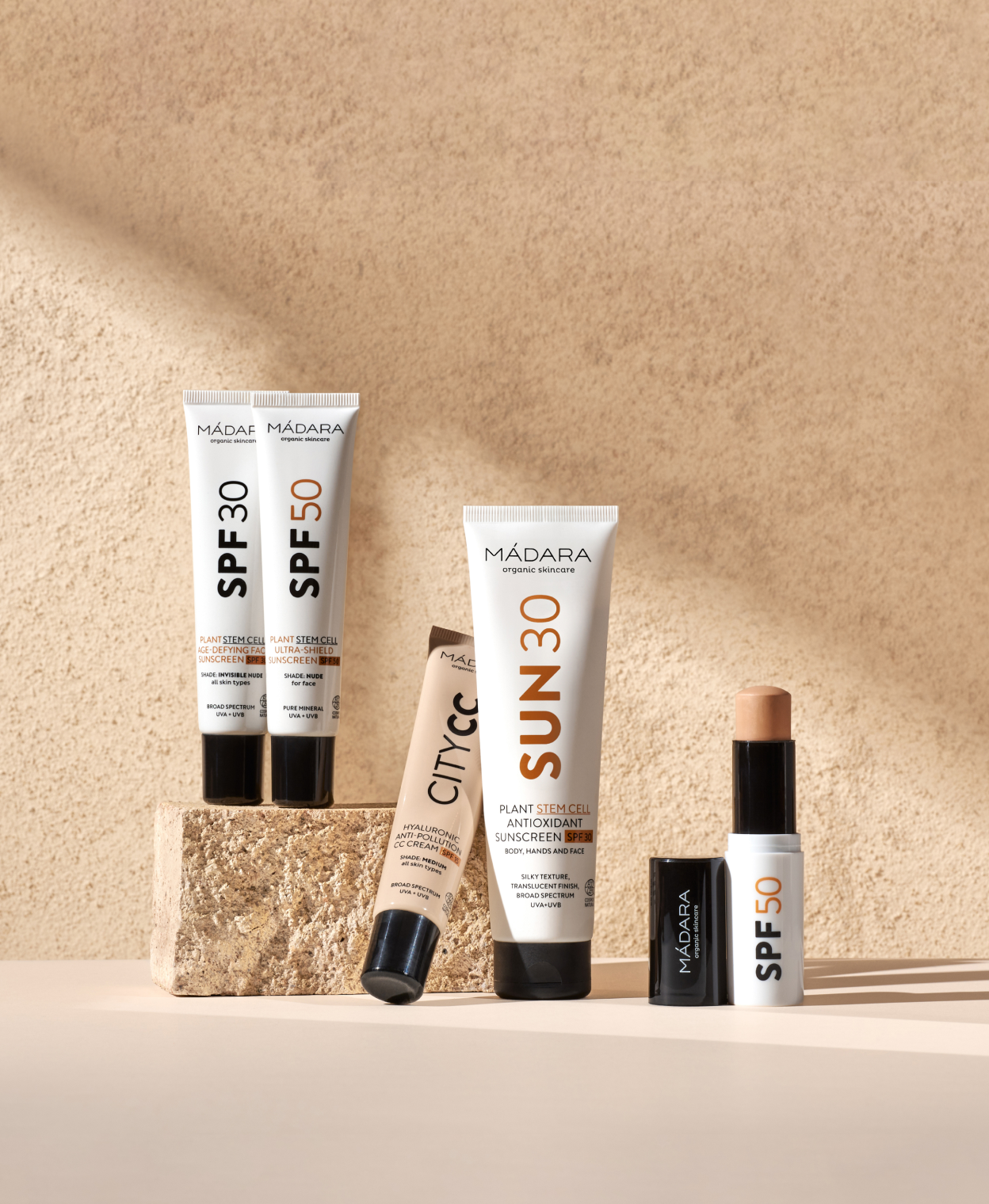
Explore body SPF for head-to-toe protection, tinted mineral sunscreens for subtle coverage that simplifies mornings and an SPF50 stick that lives in your bag for quick top-ups.