Everything You've Ever Wanted To Know About Exfoliation
Introduction
Exfoliation might be one of the most important, yet underrated step, in your skincare routine, often surrounded by a lot of misconceptions. Don’t let the word combination chemical peel scare you – exfoliating, when done right, is the secret to achieving smooth, glowing skin. Here, we consult with our certified beauty therapist Kitija to give you a breakdown of different exfoliation practices for your face (or any body part, really).
What exactly is exfoliation?
“Exfoliation removes dead cells from the skin’s surface, boosting cell turnover to reveal the newer, more radiant cells underneath,” Kitija explains. It also boosts the efficacy of other skincare products, since without the layer of dead skin they can penetrate the skin’s surface more easily.
Though most skin types can benefit from exfoliation, do be mindful of the intensity – Kitija says overdoing it can be counterproductive. Exfoliating too often or using an exfoliator that not suitable for your skin can lead to irritation, peeling and redness, so always check the product label first for the most accurate instructions.
Exfoliating in summer – yes or no?
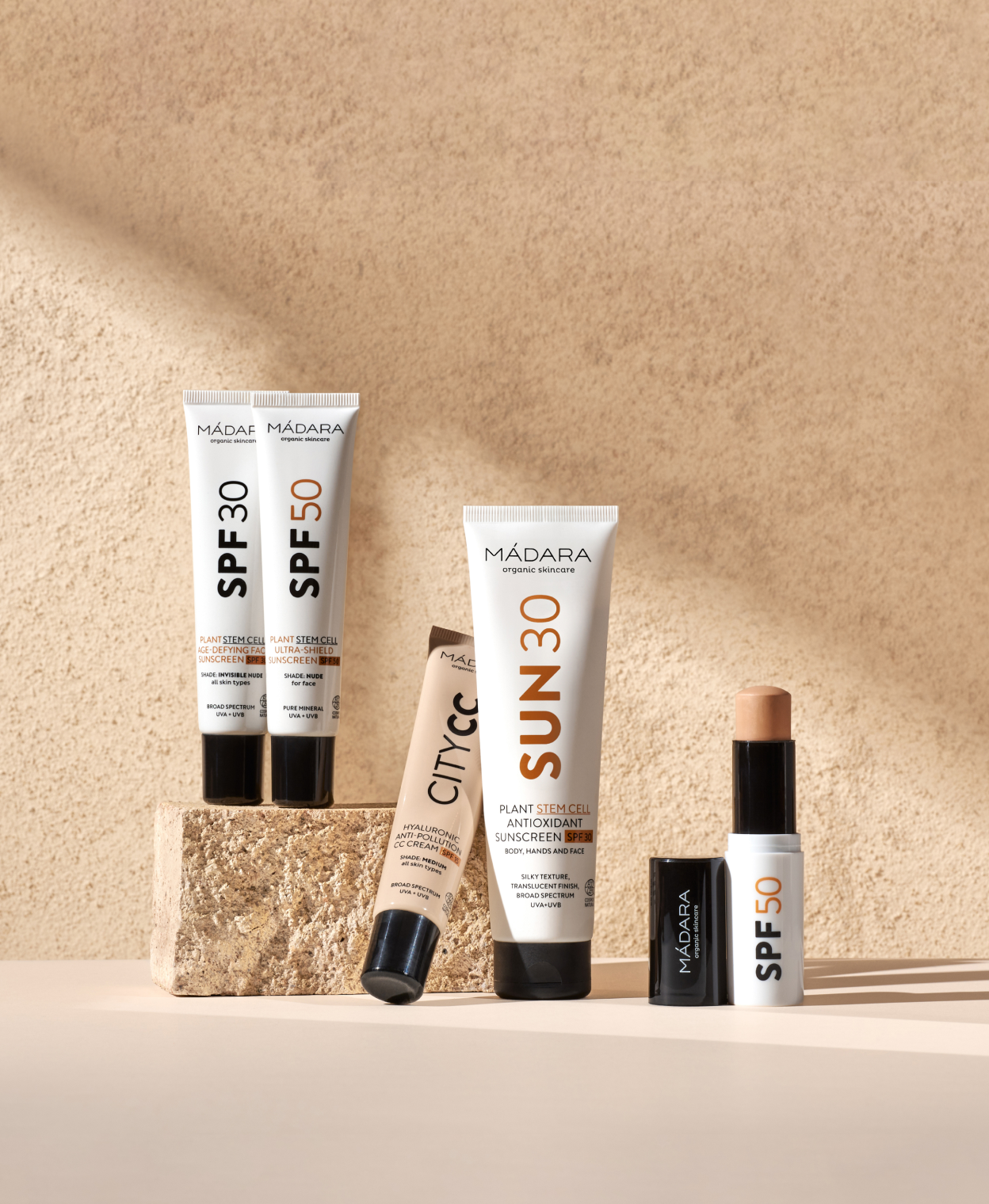
Exfoliation can and should be done in summer – after all, sloughing off those dead cells makes space for a more even and smooth tan. However, Kitija recommends to proceed with caution: “Exfoliation makes the skin more vulnerable, especially to sun exposure.” Only exfoliate at night and remember to always wear high protection sunscreen, like MÁDARA SPF50 Ultra-Shield mineral sunscreen, to protect those new cells.

SPF50 Plant Stem Cell Ultra-Shield Sunscreen

Chemical vs mechanical exfoliation
There are two main types of exfoliation – chemical and mechanical. They both work towards the same goal, just in different ways.
“Chemical exfoliators slough off dead skin cells using acids such as AHAs, PHAs and BHAs to stimulate cell turnover,” Kitija explains. This helps achieve a brighter, more radiant and refined complexion that we all crave, enhancing skin hydration, unclogging pores and targeting hyperpigmentation.
If you have very sensitive skin or are a newbie to acids, Kitija suggests starting with baby steps. Go for the gentlest formulations and slowly incorporate them into your routine, only later working your way up to stronger active ingredients.


On the other hand, mechanical exfoliators – products containing small particles or bristles of a brush – work by physically scrubbing away surface cells and dislodging dirt in gentle motions which also help boost circulation. Keep in mind mechanical exfoliation should only be performed on intact skin, and never during acute inflammation or breakouts.

Should I exfoliate my body, too?
Skincare is not just for our faces – in fact, the skin of our body deserves some extra loving, too. Regular head-to-toe exfoliation will not only feel indulgent but also make your bodycare routine go further, polishing off dullness and dead cells to leave the skin silky soft and hydrated.
Body exfoliation has a plethora of benefits – it boosts circulation, targets uneven texture and skin tone irregularities, all the while helping to keep breakouts at bay and prevent ingrown hairs when shaving. Plus, it will make your showers all the more pleasant.
Same as with your face, body exfoliation does not need to be performed daily. “1-2 times a week will be enough,” Kitija says.
Unlock your best skin – explore our exfoliators