Why synthetic makeup is not the best in the summer heat
Introduction
Summer and the sun are game changers when it comes to makeup. Juicy colours, dewy finishes, glowy highlights are everything we crave during the sunny summer months. But did you know that some synthetic makeup ingredients can actually be harmful to your skin in the heat or light?
We have listed 3 facts on how makeup and the sun impact our skin, and 3 tips that will make your skin feel better during the summer.

1. Not all foundations act the same when they are exposed to the sun
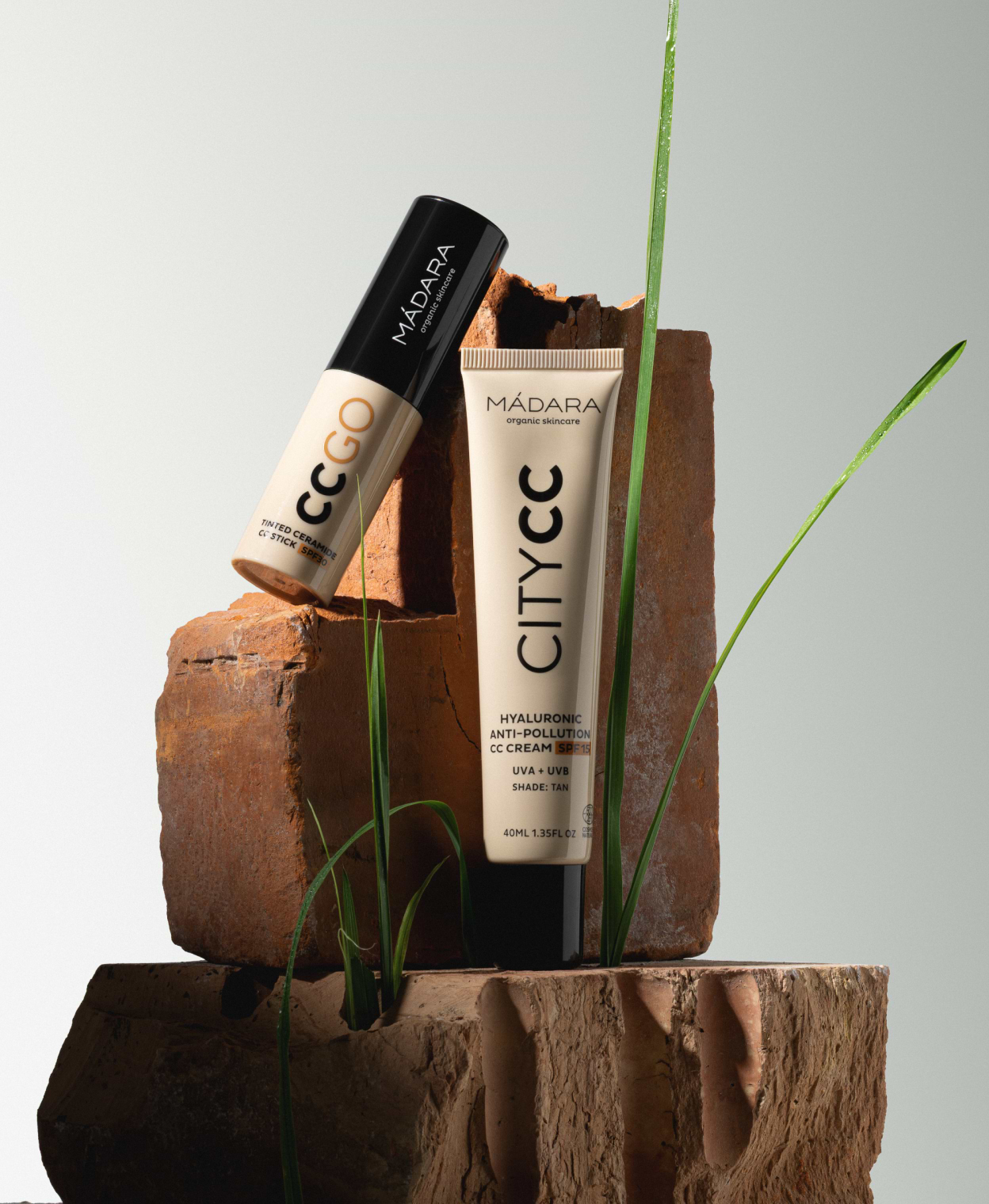
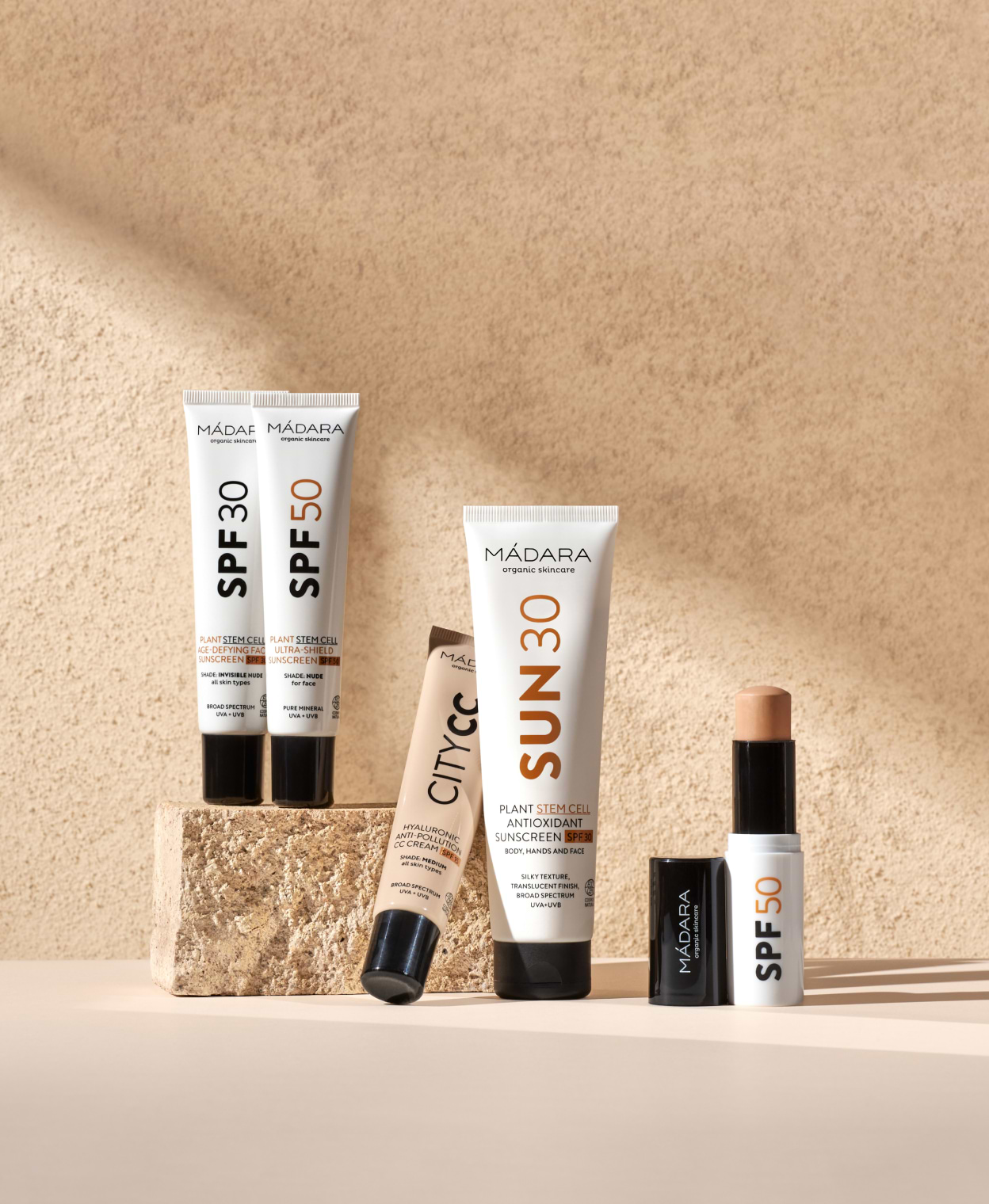
By now you should know that sun protection is the most religious thing in beauty. Research¹ shows that UV rays alone are responsible for 80% of the visible signs of skin ageing. This is why foundations with SPF are a great choice to keep your skin protected and flawless all throughout the year, but especially during the sunny days.
However, not all foundations are the same. Did you know that some foundations may become toxic in the sun rays? Foundations containing synthetic UV filters may cause skin damage. Research² indicates that when synthetic sun filters interact with the UV light, they generate a toxic reaction.
In a study, a commonly used UV filter (butyl methoxydibenzoylmethane or avobenzone) showed a pronounced phototoxicity enhancement that was dependant on the intensity of the UV light. The combination of several synthetic UV filters (octyl methoxycinnamate and avobenzone) showed that it may be potentially phototoxic.
How do you know if your foundation is safe? Choose foundation which contain natural mineral UV filters. They work by simply reflecting the sun rays from the skin’s surface.
INGREDIENTS TO WATCH OUT FOR ON THE LABELS:
✕ Oxybenzone (Benzophenone-3)
✕ Octinoxate (Ethylhexyl Methoxycinnamate)
✕ Octocrylene (Octocrilene)
✕ Avobenzone (Butyl Methoxydibenzoylmethane)
✕ Homosalate (Benzoic acid, 2-hydroxy-, 3,3,5-trimethylcyclohexyl ester)
✕ Octisalate (Ethylhexyl Salicylate)
MÁDARA CHOICE:
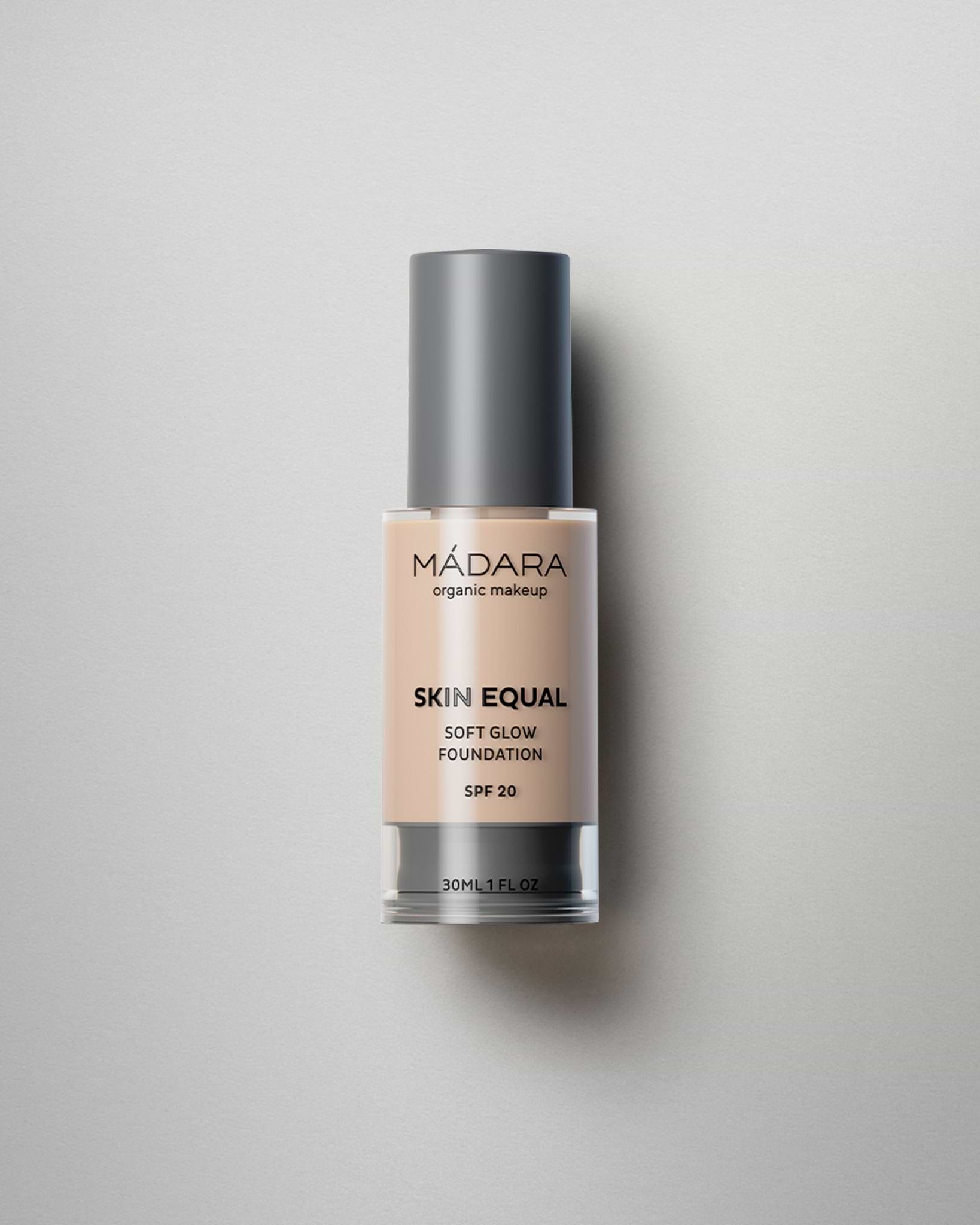
Skin Equal Soft Glow Foundation SPF20
We suggest trying out the MÁDARA Skin Equal mineral foundation, which protects your skin from the sun rays with SPF 20, and makes your complexion look flawless all throughout the day.

2. Is the red colour toxic?
Summer cannot be imaginable without the iconic combo – blue jeans, white shirt, and red lipstick. But is it safe to wear the colour red in the sunlight
Some of the synthetic dyes used in makeup can actually cause adverse reactions when exposed to light. For instance, red-coloured makeup containing phloxine (CI 45410), erythrosine (CI 45430) react with proteins on skin under lighting by generating radicals, which could lead to rough skin. Both chemicals, known as synthetic red dyes, are permitted as cosmetic colourants in the Europe.
Red makeup pigments can also cause dermatological disorders. Red colourant Brilliant Lake Red R (CI 15800), which is used to produce face makeup (also permitted in Europe), has been reported in scientific publications³ to have a sensitising effect and could be linked to contact dermatitis.
And another dirty-red pigment is carmine. Even though it is natural and safe, it is not completely ethical, as it is obtained from crushing the beetles who produce the stain. We suggest looking out for cruelty-free formulas.
INGREDIENTS TO WATCH OUT FOR ON THE LABELS:
✕ CI 75470 (carmine)
✕ CI 45410 (phloxine)
✕ Other names: ACID RED 92; SOLVENT RED48; CI 45430 (erythrosine)
✕ Other names:ACID RED 51; PIGMENT RED 172; CI 15800 (Brilliant Lake Red R)
OTHER POPULAR SYNTHETIC RED DYES INCLUDE:
✕ CI 16035 (Red 40)
✕ CI 12085 (Red 36)
✕ CI 12490 (Red 5)
✕ CI 14700 (Red 4) and others
MÁDARA CHOICE:
This hydrating lipstick gives your lips a hint of wicked colour in a non-harmful and safe way – it is created with natural mineral pigments, no synthetic colourants and no animal origin pigments (we don’t use the red carmine from bugs).


3. Does the makeup allow your skin to “breathe” ?
In hot and hot-humid conditions, it is important that natural skin perspiration is possible, therefore the use of occlusive or blocking cosmetic ingredients is not recommended.
The most common occlusive ingredients are mineral oils, lanolin, and some types of silicones – dimethicone, cyclomethicone, which are often the base for many conventional makeup formulations, such as foundations, compact blushes, eye shadows.
The use of occlusive ingredients in makeup (and skincare) in warm conditions compromises the “breathing” of the skin and may lead to breakouts and worsen acne.
Choose your daily products wisely, and especially in the summer - avoid makeup and skincare products that contain mineral oil, silicones, lanolin.
How do you know if your cosmetic products are clean? Study the ingredient list on the labels.
INGREDIENTS TO WATCH OUT FOR ON THE LABELS:
✕ Mineral Oil
✕ Paraffinum Liquidum
✕ Liquid Paraffin
✕ Petroleum Jelly
✕ Vaseline
✕ White Mineral Oil
✕ Paraffinum Subliquidum
✕ Paraffinum Album
✕ Paraffinum Flavum
✕ Petrolatum Base
✕ Soft Paraffin
✕ Silicones: dimethicone, cyclomethicone
MÁDARA CHOICE:
Skin Equal Soft Glow Foundation SPF20 and The Concealer Luminous Perfecting Concealer.
The Concealer effectively yet undetectably conceals spots and dark circles, and the Skin Equal foundation covers the imperfections whilst leaving the skin smooth and radiant. Both complexion products contain natural, lightweight emollients, that are extra breathable and kind to your skin.


Enjoy the summer time to the fullest and wear whichever look makes
you feel the best - be bold with your makeup or rock a subtle glow
with some blush, but remember to always use safe cosmetics that are kind to your skin!
Resources:
1. Effect of the sun on visible clinical signs of aging in Caucasian skin. Frederic Flament, Roland Bazin, Sabine Laquieze, Virginie Rubert, Elisa Simonpietri, Bertrand Piot Clin Cosmet Investig Dermatol. 2013; 6: 221–232. Published online 2013 Sep 27. doi: 10.2147/CCID.S44686.
2. Toxicology in Vitro’. Lorena R. Gaspar, Julian Tharmann,Patricia M.B.G. Maia Campos,Manfred Liebsch
3. Phototoxic reaction to xanthene dyes induced by visible light. Morikawa F, Fukuda M, Naganuma M, Nakayama Y. J Dermatol. 1976;3(2):59-67. doi:10.1111/j.1346-8138.1976.tb00973.x